This article was first published on 14th December 2017 on #FolkloreThursday.com titled British Legends — The Founding of Britain: Brutus of Troy and the Prophecy of Diana by zteve t evans
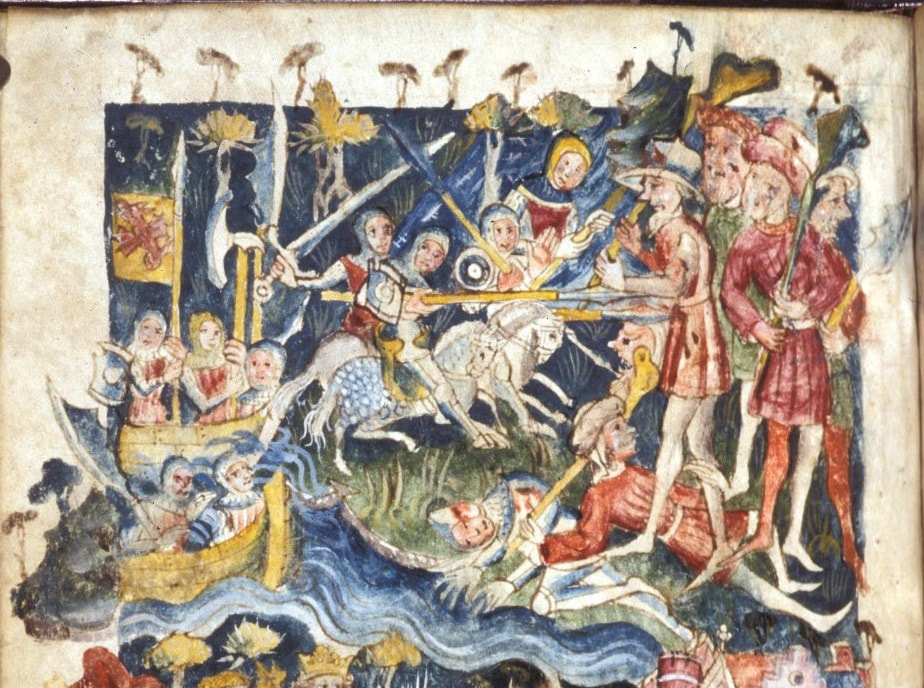
Brutus of Troy was a legendary Trojan exile who some medieval chroniclers claimed was responsible for the founding of Britain. They maintained that he was the first King of Britain and named the island, its people, and its language after himself. He built the city that would eventually become London, and gave laws to allow people to live in peace. The story of Brutus of Troy first appears in the work Historia Britonum or The History of Britons (ca AD 829), which is often attributed to the medieval chronicler Nennius. He is also mentioned later in more detail in Historia Regum Britanniae or History of the Kings of Britain, written in about 1136 by Geoffrey of Monmouth. There are some significant differences in the stories the two present, though Geoffrey’s work provides more information. Geoffrey dates the arrival of Brutus on the island, which was then called Albion, to 1115 BC. Although his work is not given much credence today, from its creation up until the 17th century, when it fell from favour, it was very popular. It is still an important medieval text, and a central piece in the collective works known as The Matter of Britain. Despite being discounted as a reliable history book, The History of the Kings of Britain remains of great interest to many people today. Many scholars think that Geoffrey drew on existing legends, myths, and traditions which he included in his work. It is Geoffrey’s work that this article draws chiefly from to present a version of the mythical founding of Britain by Brutus of Troy
.
The Lineage of Brutus
Brutus was said to be the great-great-grandson of the Greek goddess Aphrodite. His great-grandfather was the Trojan hero Aeneas, who was the son of Anchises and Aphrodite. Aeneas escaped the destruction of Troy carrying his crippled father in his arms and became the leader of a group of Trojan exiles, who escaped to settle in Italy. He was the progenitor of Romulus and Remus, and many of Rome’s rulers later claimed descent from him and the Royal House of Troy. Aeneas had a son named Ascanius, who was the father of Silvius who was the father of Brutus.
The Royal House of Troy had two branches: the Dardanoi of Dardania and the House of Troy. Although the Dardanoi of Dardania was the most ancient branch, it was the House of Troy which became the most famous and powerful. Anchises (the father of Aeneas) was from the city of Dardania, which was founded by Dardanus whose grandson Tros gave his name to the city of Troy and its people the Trojans.
The Birth of Brutus
The story of Brutus begins in Italy, where the Trojan exiles resided. When his wife fell pregnant, Silvius asked a sorcerer what sex the unborn child would be and what its future would hold. The sorcerer predicted a boy would be born and this proved correct. He also predicted that the boy would be exiled after causing the death of both of his parents. Finally, he predicted that when he reached adulthood he would travel through many countries and would fulfil many great achievements. Not all these predictions were to the liking of Silvius, who killed the sorcerer. However, his wife died during the birth of the boy, who was named Brutus, and when he reached the age of 15 he accidentally killed his father, shooting him with an arrow while hunting. As punishment, Brutus was exiled from Italy and travelled to several islands before reaching Greece. The unfortunate seer was proved correct about the first two parts of his prophecy, and the rest was beginning to unfold.
Trojans Enslaved in Greece
Whilst in Greece, Brutus met a group of Trojans living in slavery and led them in rebellion against Pandrasus, the Greek king. He was successful, and after defeating and capturing Pandrasus he held him hostage. Although he had him at his mercy, he realized that there would be a continuing war with the Greeks which the Trojans could not win. Therefore, instead of killing Pandrasus, Brutus made a bargain with him. He freed Pandrasus, in return for him freeing the Trojans from slavery and providing Brutus and his band of followers with enough ships and supplies to sail from Greece in search of a new home. Pandrasus also gave his daughter, Ingoge, in marriage, who sailed with Brutus and his company in search of a place they could settle and live in peace.
Read More
.
The Lineage of Brutus
Brutus was said to be the great-great-grandson of the Greek goddess Aphrodite. His great-grandfather was the Trojan hero Aeneas, who was the son of Anchises and Aphrodite. Aeneas escaped the destruction of Troy carrying his crippled father in his arms and became the leader of a group of Trojan exiles, who escaped to settle in Italy. He was the progenitor of Romulus and Remus, and many of Rome’s rulers later claimed descent from him and the Royal House of Troy. Aeneas had a son named Ascanius, who was the father of Silvius who was the father of Brutus.
The Royal House of Troy had two branches: the Dardanoi of Dardania and the House of Troy. Although the Dardanoi of Dardania was the most ancient branch, it was the House of Troy which became the most famous and powerful. Anchises (the father of Aeneas) was from the city of Dardania, which was founded by Dardanus whose grandson Tros gave his name to the city of Troy and its people the Trojans.
The Birth of Brutus
The story of Brutus begins in Italy, where the Trojan exiles resided. When his wife fell pregnant, Silvius asked a sorcerer what sex the unborn child would be and what its future would hold. The sorcerer predicted a boy would be born and this proved correct. He also predicted that the boy would be exiled after causing the death of both of his parents. Finally, he predicted that when he reached adulthood he would travel through many countries and would fulfil many great achievements. Not all these predictions were to the liking of Silvius, who killed the sorcerer. However, his wife died during the birth of the boy, who was named Brutus, and when he reached the age of 15 he accidentally killed his father, shooting him with an arrow while hunting. As punishment, Brutus was exiled from Italy and travelled to several islands before reaching Greece. The unfortunate seer was proved correct about the first two parts of his prophecy, and the rest was beginning to unfold.
Trojans Enslaved in Greece
Whilst in Greece, Brutus met a group of Trojans living in slavery and led them in rebellion against Pandrasus, the Greek king. He was successful, and after defeating and capturing Pandrasus he held him hostage. Although he had him at his mercy, he realized that there would be a continuing war with the Greeks which the Trojans could not win. Therefore, instead of killing Pandrasus, Brutus made a bargain with him. He freed Pandrasus, in return for him freeing the Trojans from slavery and providing Brutus and his band of followers with enough ships and supplies to sail from Greece in search of a new home. Pandrasus also gave his daughter, Ingoge, in marriage, who sailed with Brutus and his company in search of a place they could settle and live in peace.
Read More

 RSS Feed
