Folkrealm Studies
  • Folkrealm Studies
    • Eskimo Folktales: The Red Skeleton
    • Paiute Mythology: The Legend of the North Star
    • Scottish legends: The each-uisge
    • Scottish legends: The Cu Sith
    • The Last Song of Thomas the Rhymer
    • Legendary places: Dozmary Pool. Bodmin Moor, Cornwall
    • Chalice Well, Glastonbury, Somerset
    • Legendary places: Wishing Wells
    • Mystery, Murder and Magic at the Rollright Stones
    • Joseph of Arimathea
    • The Glastonbury Thorn
    • Victorian mysteries: Spring-heeled Jack
    • Brutus of Troy, first King of Britain
    • Beowulf - Hero of the age
    • The Mermaid of Blake Mere Pool, Staffordshire, England
    • A legend of the white hare
    • Sunken Bells: The Legend of the Kentsham Bell
    • Dartmoor folklore: Vixiana the Witch of Vixen Tor
    • Origins of the Chinese Dragon Boat Festival
    • Japanese folktales: The stonecutter
    • Japanese folktales: The Bamboo cutter and the Moon-child
    • Russian folktales: The Fool and the flying ship
    • European Folktales: The Hunter and the Swan Maiden
    • To love a Swan Maiden
    • The Swan Maiden's challenge
    • German Fairy Tales: The Six Swans
    • The Evolution of Christmas
    • Introduction to Chilote mytholgy
    • Chilote mythology: The Royal Family of the Sea
    • El Caleuche: The ghost ship of Chilote folklore
    • Supernatural beings in Chilote mythology
    • Corineus, first Duke of Cornwall
    • Cornish folklore
    • Cornish legends: The tasks of Jan Tregeagle
    • Jack the Giant-killer fights Cormoran the Giant
    • Cornish legends: The Mermaid of Zennor
    • Cornish Folklore: The Witch of Treva
    • Lost Worlds
    • Lost Worlds: The drowning of the city of Ys
    • Lost worlds: The town beneath Kenfig Pool
    • Lost worlds: The drowned Russian city of Kitezh
    • Lost worlds: Cantre’r Gwaelod of Wales
    • Lost worlds: El Dorado
    • Lost worlds: The sunken realm of Tyno Helig
    • Lost worlds: Semerwater
    • Lost worlds: The town beneath Lake Bala
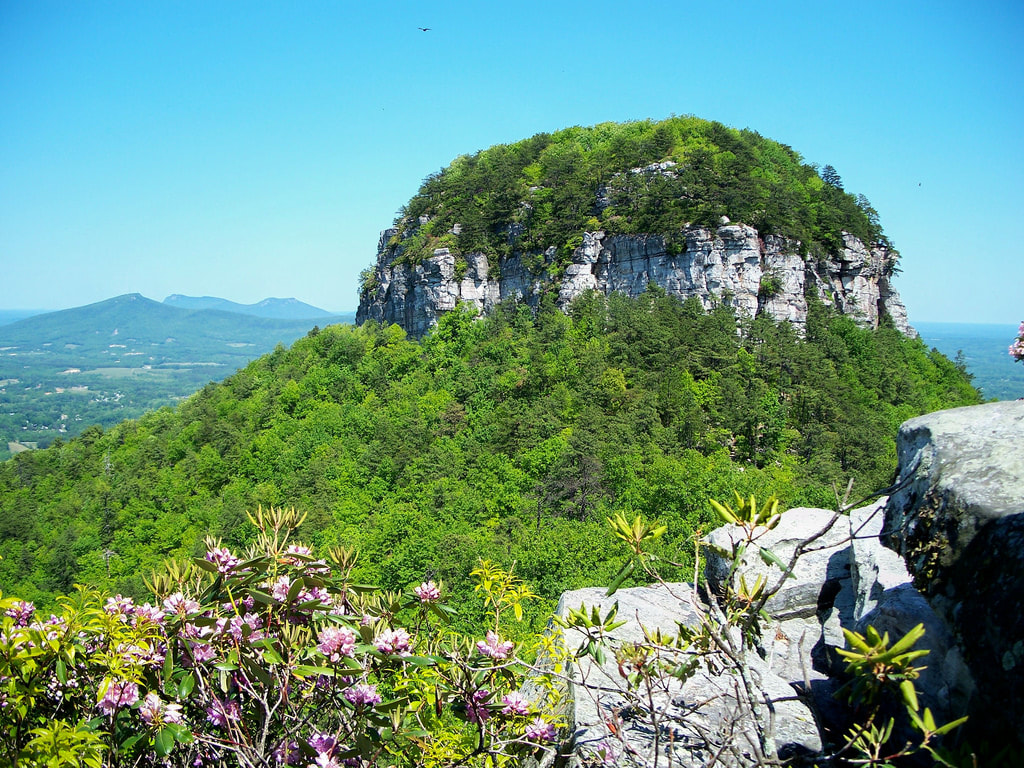
    • Lost Worlds: The Hidden Cherokees of Pilot Mountain
    • Welsh mythology
    • Welsh legends: The Lady of Llyn y Fan Fach
    • Welsh legends: King March's ears
    • Welsh legends: The Afanc of the River Conwy
    • Welsh legends: The birth of Taliesin
    • The Legend of the Church of the White Stag
    • Welsh legends: Mereid of Cantre’r Gwaelod
    • Publications by zteve t evans
    • Tales of the Lost, the Drowned and the All-Seeing Eye: Vengeance Will Come!
    • Folkrealm Tidings
    • Policies, Terms and Conditions, Disclaimers and Notices

The Folktale of the Origin of Multnomah Falls, Oregon

17/5/2019

0 Comments

 
Picture
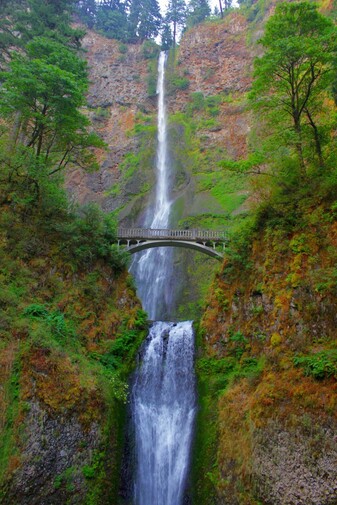
Multnomah Falls

The Multnomah Falls is a waterfall situated not far from Portland in Oregon.  It is a local beauty spot which many people visit to see  torrents of cool, crystal clear, water cascade over the edge of a cliff to fall over 611 feet in a spectacular cascade.  A legend is associated with its creation that tells a story of love, devotion, faith and sacrifice.

Chief Multnomah

Many, many, years ago there was a Native American chief called Multnomah who had a beautiful daughter that he loved more than anything. Having lost his sons in wars he loved and cherished her even more and wanted to be sure when the time came she would have the best possible husband. To meet this goal he spent a lot of time looking over the young men of his own and neighboring villages for the best possible match.  At last he decided that the best husband for his daughter would be a young chief from the Clatsop people who were neighbors.  It proved to be very good match and the two quickly developed a deep rapport and fell in love with one another.

                                                            Read More
0 Comments

Native American Myths:  Coyote and the Legend People of Bryce Canyon

20/12/2018

0 Comments

 
Picture


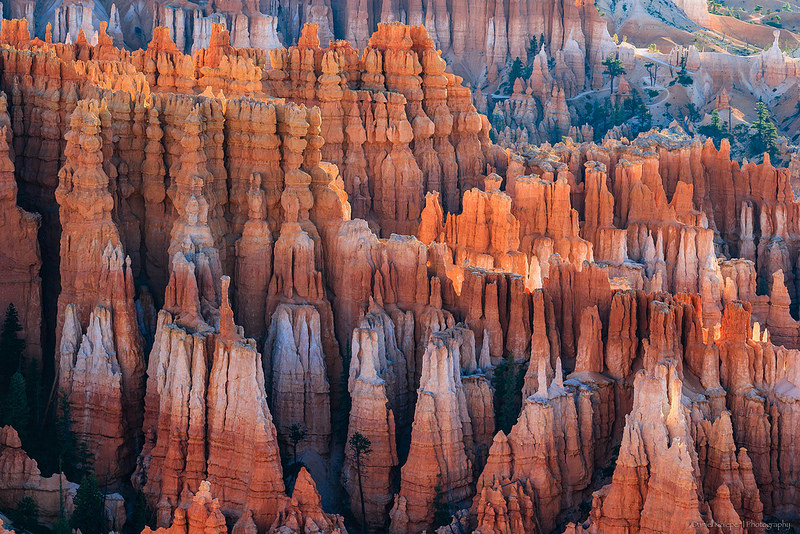
In the desert of southwest Utah in the United States of America is a remarkable place known as Bryce Canyon which many, many bizarre and colorful rock formations. The canyon is named after Ebenezer Bryce, a Mormon pioneer who settled in the area in 1874.  However, the Native American Paiute people of the region who were there long before the arrival of pioneers called it Angka-ku-wass-a-wits or red painted faces.
Bryce Canyon must surely be one of the most extraordinary natural places on earth.  It is a place where strange rock formations of yellow, orange and reddish brown that change hue as the light changes and fill the mind with many fantastical shapes and forms that appear grotesquely humanoid.

In geological terms, these columns are called hoodoos a term also used in witchcraft and the supernatural.  The Paiute people tell a very different story to the geologists but both explanations are really very extraordinary.   Presented first is a brief and simplified version of the geological explanation.  This is followed by a version of the traditional explanation given by the Paiute people who believed the columns were created when a mythical race called the Legend people were punished by their divine entity Coyote.

                                                                   Read More

This website uses marketing and tracking technologies. Opting out of this will opt you out of all cookies, except for those needed to run the website. Note that some products may not work as well without tracking cookies.

Opt Out of Cookies
0 Comments

The Legend of the Great Stone Mother of the Paiutes of North America

14/10/2018

0 Comments

 
PicturePyramid Lake, Nevada – by Rhalden – Public Domain
The Paiute people are a Native American people living in areas of California, Nevada and Oregon, Arizona, southeastern parts of California and Utah. They have a rich heritage of culture and tradition and strong family values.   In the past, much of their known history had been passed on orally to their children from a long line of ancestors.  Like many other cultures, they used folktales to pass on information and to attempt to make sense of the world around them.   Presented here is the story of the Great Stone Mother is one of their folktales and what is presented here is a rewrite from more than one source,  but first a word about the Great Stone Mother.
The Great Stone Mother of the Paiutes people sits on the eastern shore of Pyramid Lake, in eastern Nevada, North America and is actually an extraordinary natural tufa rock formation. It bears a remarkable likeness to the figure of a hooded Indian woman sat looking out over the lake with her basket resting next to her.  To the Paiutes she has not always been stone but was the mother of their people.  What follows next is an extraordinary legend that tells of their origin and how she became petrified into stone.
The Legend of the Great Stone MotherWhen the world was very young Man, the father of the people, roamed the earth alone and came to a mountain that was near still water.  Finding the place to his liking he made the Reese River and decided to live there. The father had a good and great soul but he was lonely living on his own and longed for company.
Many days passed and eventually rumor of the existence of Man reached Woman, who became the mother of the people, but at then was married to Bear.  She grew very curious about Man and longed to see him.  

                                                                       Read More

0 Comments

The Cherokee Legend of Tsuwe’nähï and the Secret Town

28/4/2018

0 Comments

 
Picture
Myths of the Cherokee People

In his book Myths of the Cherokee People (1902) the American ethnographer, James Mooney (1861-1921) compiled a large bank of folklore, legend, and mythology of the Cherokee people that provides a remarkable insight into how they viewed and made sense of the world around them.   Some of these legends tell of a secret or invisible tribe of Cherokees who live either inside Pilot Mountain or in some hidden valley only reached by passing a concealed entrance in the mountain’s side.  The following work is a rewrite of the legend called Tsuwe’nähï: A Legend of Pilot Knob from Mooney’s book that tells of these secret people and their hidden town.

Lazy Tsuwe’nähï

There was once a lazy man whose name was Tsuwe’nähï.  He lived in an old town called Känuga that was situated on the banks of the Pigeon River.  He was too lazy to build his own house so instead, he lived with friends and relatives moving frequently from one to another.   Although he liked to spend all of his time in the woods he never bothered to hunt to bring back game as thanks to those who kept him through their good nature.
At last the good nature of his friends and relatives ran thin and they tired of him living off their generosity and they told him so.  Tsuwe’nähï pleaded for a last chance and asked them to prepare some parched corn for him to take on a hunting trip.  He promised them he would bring back deer, or some other kind of game, telling them if he failed he would never bother them again.

So his friends and relatives gave him a pouch with enough corn to sustain him on his hunting trip and he headed off into the mountains.   Many days passed, and weeks turned to months but he did not return and everyone thought they would never see him again.  Then one day he appeared in the town with a strange tale to tell.

The Strange Tale of Tsuwe’nähï

He told his friends and relatives that he had followed the trail towards the mountains and as he passed across a ridge he had met a stranger.  They greeted each other in a friendly fashion and stopped to talk to each other.  The stranger asked him where he was going out in the wilds on his own.   Tsuwe’nähï told him that his friends had relatives had driven him out of their homes telling him he was lazy.  He told him that he must bring back game to share with them or they would not have him back and ruefully he explained he was not a very good hunter.  The stranger smiled at him and said, “Come and visit my town. It is not far and you will see that you have relatives and friends there.”
                                                                    Read More

0 Comments

The Native American Legend of The First Hummingbird

1/2/2018

0 Comments

 
Picture
In her book, The Book of Nature Myths (1904) Florence Holbrook collected over fifty traditional Native American myths and legends many of which tell of the origin of how things came to be.   What follows is a rewrite of The Story of the First Hummingbird.

The Great Fire Mountain

In a time when the earth was still young and growing there were two hunters in the forest searching for game.  They had followed the trail of a deer for many days and had traveled a great distance from their village, much further than they or any other villager had ever been before.  When evening came and the sun began to slowly sink and darkness fell all around them they stopped to rest for the night.  Huddling together for warmth they looked out over the western sky and saw a bright light glowing in the distant darkness, flickering, red, yellow and orange.

“What can that be?” said one.

“It must be the moon,” said the other.

“Surely not.  We have seen many moons and we have seen it round and full and we have seen its shapes and it is not like we have seen before.  Could it be the northern lights?”

“We have seen the northern lights and they are not like this,” replied the other.
“Whatever can they be?” said the other.

“Perhaps it is the fire of the Great Spirit and maybe he is cooking?” one asked.

“Perhaps he is angry with us and will punish us with flames!” said the other.

With nothing else to be done until sunrise, they sat up all night watching as the lights flickered red, yellow and orange in the western sky.  At sunrise, they were astonished to see flames of red, yellow and orange flickering on the distant horizon and thick plumes of dark, blue smoke rising high into the clear blue sky.   They had no idea what the flickering flames could be so they decided they would go and see.  As they drew near they could see the flames and the smoke more clearly and saw they were rising from the crest of a steep mountain way off in the distance.

“It looks like a great mountain of fire, what shall we do?” said one.

“Let’s go a bit closer and see more,” said the other.

So they trekked on until they came so close they could see fire leaping out of splits in the mountainside and flickering around its peak like a fiery crown.
“It is a mountain of fire!  This will be of great help to our people.  Let’s go on,” said one,
They came to the foothills and climbed steadily up the sides of the fiery mountain until they stood right on its to top and looked down into its center and saw a sea of red hot molten rock with flames dancing across it.

                                                                      Read More

0 Comments

Native American Legends: First Falling Thunder and the Little Bird

11/7/2017

0 Comments

 
Picture
This is a retelling of a folktale from the Colorado foothills collected by  Charles M. Skinner called Riders of the Desert, published in his book Myths and Legends of Our Own Land  (1896).

Ta-in-ga-ro and Zecana

Ta-in-ga-ro, which means First Falling Thunder, built his lodge in the Colorado foothills among the towering sandstone columns.  Although he was brave in battle and swift in the chase he preferred to spend his time in the company of Zecana, which means Little Bird, who was his wife, rarely joining in with the forays of the men of his tribe.
He trapped beaver and hunted the wild sheep and would take them to a trading post on the Mexican border.  He would take his beloved Zecana along with him as he could not bear to be parted from her.  It was on one such outing when a Spanish trader saw Zecana and became enamored with her.  He dreamed about her day and night to the point where he became consumed by his own lust for her and craved for his fill of her body.  To satisfy his hunger he plotted to separate her from Ta-in-ga-ro who rarely left her side.

To achieve this aim while keeping his feelings for Zecana secret he persuaded Ta-in-ga-ro to undertake a journey to a distant mountain, promising him that Zecana could remain in safety and comfort at the trading post until he returned.  Ta-in-ga-ro was an honest man who would never knowingly hurt anyone and could not envisage that everyone was not like himself and  he agreed and began the journey.

A Bad Omen

Along the way, he stopped at a spring to rest and refresh himself.  He saw how the blue sky and clouds reflected in the cool clear waters and after he had drunk his fill he cast some beads and wampum into the water as was customary to thank the spirit.  Throwing his offering into the spring he was most shocked to see a bad omen manifest within the water.  Instead of reflecting the sky to his horror and fear he saw the agonized and anguished face of his beloved wife appear.

As fear washed over him he jumped to his feet and jumped upon his horse and galloped back to the trading post without stopping for rest or food.  When he arrived at he jumped from his horse and ran into the building looking for his wife. 

                                                                          Read More

0 Comments

Pima Mythology: The Great Flood of Cherwit Make

9/3/2017

0 Comments

 
Picture
The Pima Legend of the Great Flood

Around the world, there are many myths and legends in many diverse countries that tell of the creation of humanity and how the creator god became disappointed and angry with his creation through their immoral behavior.  To put the earth right and to punish the immoral majority he sends a Great Flood to drown them while saving a few of the worthy to repopulate the earth.  The following is an example of such a legend from the Native American Pima people of Arizona, USA.  It  tells of the creation of humanity by their god Cherwit Make and how he sent a Great Flood against them when their behavior came to displease him.

The Creation of the World

In the sacred traditions of the Pima people, the creator of all humans and animals was Cherwit Make, the earth-maker, who was the butterfly.  Cherwit Make had fluttered out of the clouds in the sky to the place of the Blue Cliffs where the Verde River and the Salt Rivers meet.  From his own sweat, he made humans.  The people thrived and multiplied but grew argumentative and selfish towards one another.    Cherwit Make was disappointed and disgusted at  his creation and decided he would bring about a great flood of the earth to drown them.  Despite his dissatisfaction with them, he thought he would give them a chance to change their ways.

Suha the Prophet

One night, using the voice of the north wind he told them to live in honesty and peace.
Only Suha the prophet heard the voice of the north wind and interpreted the message for his people. They would not believe him and told him he was a fool to listen to the wind.

                                                                        Read more ...

0 Comments

Chippewa Folktales:  The Legend of the Sleeping Bear

27/10/2016

0 Comments

 
Picture
This is a Native American legend from the Chippewa people that tells how North Manitou Island and South Manitou island, were created in the Great Lake now called Lake Michigan and how the Sleeping Bear Dune on its shore came to be.

Mishe Mokwa

A long time ago on the Wisconsin side of Mishigami, the great lake, which is now call Lake Michigan, lived a mother bear called Mishe Mokwa, who gave birth to twin cubs in the spring. In keeping with her sacred duty to her young, she taught them how to live in the wild and how to find shelter. She taught them how to find clean water from the creeks and rivers, how to use their claws to dig out the dead trees for ants and grubs and how to follow honey bees back to their nests and steal their honey. Mishe Mokwa taught them plants that would heal them when they were sick and she taught them which animals were to be avoided and all the dangers of the wild woods because even for bears there were many.  Read More


0 Comments

The Cherokee Legend of the Origin of Strawberries

26/8/2016

0 Comments

 
Picture
The Cherokee have many wonderful stories that explain aspects of their life and nature and help them to make sense of their place in the world.  In 1902, James Mooney, an ethnographer, published Myths of the Cherokee which presented a collection of myths, legend, traditions and customs of the Cherokee people.  In many of their legends and folktales there is no formal ending or conclusion as such which leaves it open for future generations to add their part in creating a living story.  A modified version of the Origin of Strawberries is presented here based on Mooney’s work and influenced by others.  Read more

0 Comments

The legend of the Cherokee Rose

3/6/2016

0 Comments

 
Picture
Cherokee folklore:  The  story of the Cherokee Rose

For the Cherokee people the Cherokee Rose was a special symbol given in answer to their prayers to give them hope and strength through a terrible ordeal.  This work briefly looks at the terrible circumstances that caused most of the Cherokee and other people to be forcibly uprooted and moved to a new home many miles away.  It also tells a version of the legend of  how a wild flower became a symbol of hope for the Cherokee people and a sign that they were not forgotten.

One of their chief’s described it as a “trail of tears and death” and thereafter the forced journey became known as the Trail of Tears.By 1928 the discovery of gold in Georgia put pressure on the government by settlers and prospectors and they forced the Cherokees and the other peoples to move to the allotted Indian Territories west of the Mississippi River which became Oklahoma.  Many Cherokees and other Native Americans died on that enforced march that began in 1834.  It was estimated that of about 16,543 Cherokees who took part up to 6,000 died on the journey.  Read more


0 Comments
<<Previous

    RSS Feed

    Author

    zteve t evans

    Categories

    All
    British Folk Songs
    Celtic Mythology
    English Folklore
    European Folktales
    Festivals
    Greek Mythology
    Hungarian Mythology
    Isle Of Man Folklore
    News
    North American Legend
    Symbols And Words
    Urban Legends
    Welsh Folklore
    World Mythology

    Archives

    January 2020
    December 2019
    November 2019
    October 2019
    September 2019
    August 2019
    July 2019
    June 2019
    May 2019
    April 2019
    March 2019
    February 2019
    January 2019
    December 2018
    November 2018
    October 2018
    September 2018
    August 2018
    July 2018
    June 2018
    May 2018
    April 2018
    March 2018
    February 2018
    January 2018
    December 2017
    November 2017
    October 2017
    September 2017
    August 2017
    July 2017
    June 2017
    May 2017
    April 2017
    March 2017
    February 2017
    December 2016
    November 2016
    October 2016
    August 2016
    July 2016
    June 2016
    May 2016
    April 2016
    March 2016
    February 2016
    January 2016
    December 2015
    November 2015
    October 2015
    September 2015
    August 2015
    July 2015
    June 2015

Powered by Create your own unique website with customizable templates.
Photos used under Creative Commons from trenchdroid, ferjflores, jarnocan, johan wieland, Muffet, Gwydion M. Williams, blachswan, AlicePopkorn2, beggs, USFS Region 10